
Understanding Interest on Unpaid Debts
Interest on unpaid debts is a key factor that influences financial management both for those who lend money and those who borrow it. As a debtor, understanding how interest works can provide insights into how your debt grows over time, enabling you to make informed financial decisions. For creditors, interest is a critical component because it represents the earnings on the money lent. Therefore, being aware of the nuances of how interest is computed is essential for financial literacy.
Types of Interest
Interest on debts can be categorized primarily into two types: simple interest and compound interest. Each has its methodology for calculation and implications for both the borrower and the creditor.
Simple Interest is characterized by its straightforward calculation method where interest is charged only on the original principal amount throughout the entire loan or borrowing period. This means the interest amount remains constant each period, without taking into account previously accrued interest. Simple interest is typically used for short-term loans or bonds where compounding is not necessary.
Compound Interest diverges significantly by adding the previously accumulated interest to the principal balance for subsequent interest calculations. Known as “interest on interest,” this method reinforces the power of compounding where the debt amount can grow rapidly, depending on the frequency at which interest is compounded, such as annually, semi-annually, or monthly.
Simple Interest Calculation
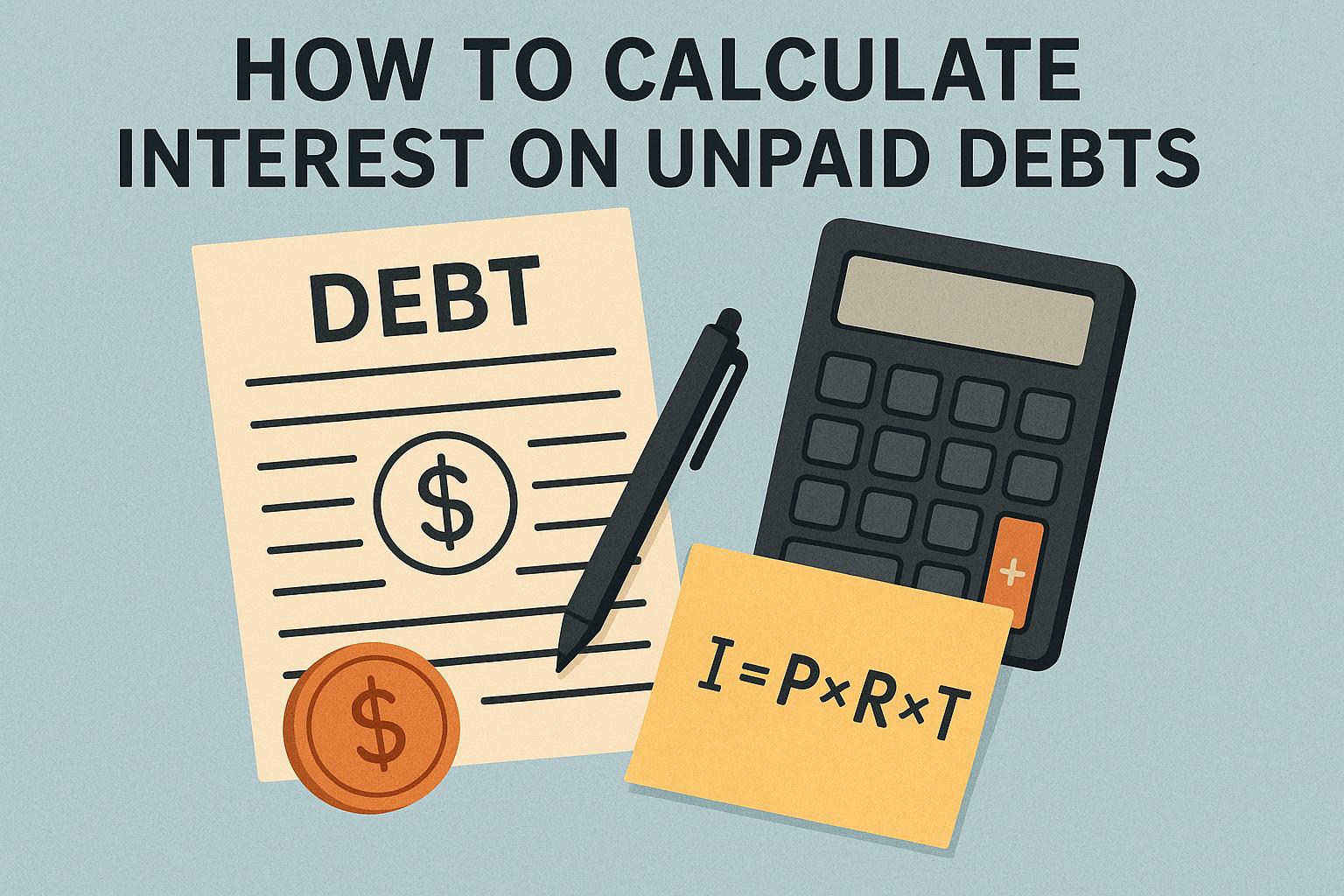
The formula to calculate simple interest is:
I = P × r × t
This formula helps calculate the interest by multiplying the principal amount (P), the annual interest rate (r), and the time period for which the money is borrowed (t).
For example, with a principal of $1,000 at a 5% annual interest rate over a two-year term, the interest would amount to:
I = $1,000 × 0.05 × 2 = $100
Here, the borrower would owe $1,100 at the end of the two-year period, which includes the original principal and the calculated interest.
Compound Interest Calculation
To determine compound interest, the following formula is used:
A = P (1 + r/n)^(nt)
Where A is the total amount including both the initial principal and the compounded interest by the end of the term. The terms P, r, n, and t are the principal, annual interest rate, number of compounding periods per year, and time in years, respectively.
For instance, for a $1,000 loan at 5% interest compounded annually over two years, the future value would be:
A = $1,000 (1 + 0.05/1)^(1×2) = $1,102.50
The compounded interest during the loan period would then be:
A - P = $1,102.50 - $1,000 = $102.50
While this difference seems minimal, as the duration of the debt increases and the frequency of compounding grows (e.g., quarterly or monthly), the effect doubles exponentially, significantly impacting the total amount due.
Additional Considerations
Interest calculations can vary widely based on lender agreements and market conditions. Rates and compounding frequencies stipulated within lending contracts can differ remarkably, influencing the resultant debt amount. Financial agreements should be reviewed meticulously to understand the terms of interest calculation.
For borrowers, having an in-depth knowledge of how interest rates work empowers them to navigate financial obligations more effectively. It aids in prioritizing which debts to settle first or how to negotiate more favorable interest terms.
Similarly, lenders need to appreciate the impact of interest rate decisions over time on their returns, thus allowing them to structure better lending deals that optimize their interest yield.
Both borrowers and lenders could benefit from exploring financial resources such as Investopedia or seeking professional financial guidance. Understanding subtle differences in interest calculation methods and the potential long-term effects they have is key to robust financial planning and debt management.
In conclusion, by expanding their comprehension of interest mechanisms, individuals can enhance their debt management abilities. This insight aids in forming strategic payment plans, choosing the right loan structures, and ultimately, improving overall financial health. An informed approach to managing debts ensures more choices when dealing with lenders and significantly reduces financial stress over time.