The Interplay Between Inflation and Debt Repayment
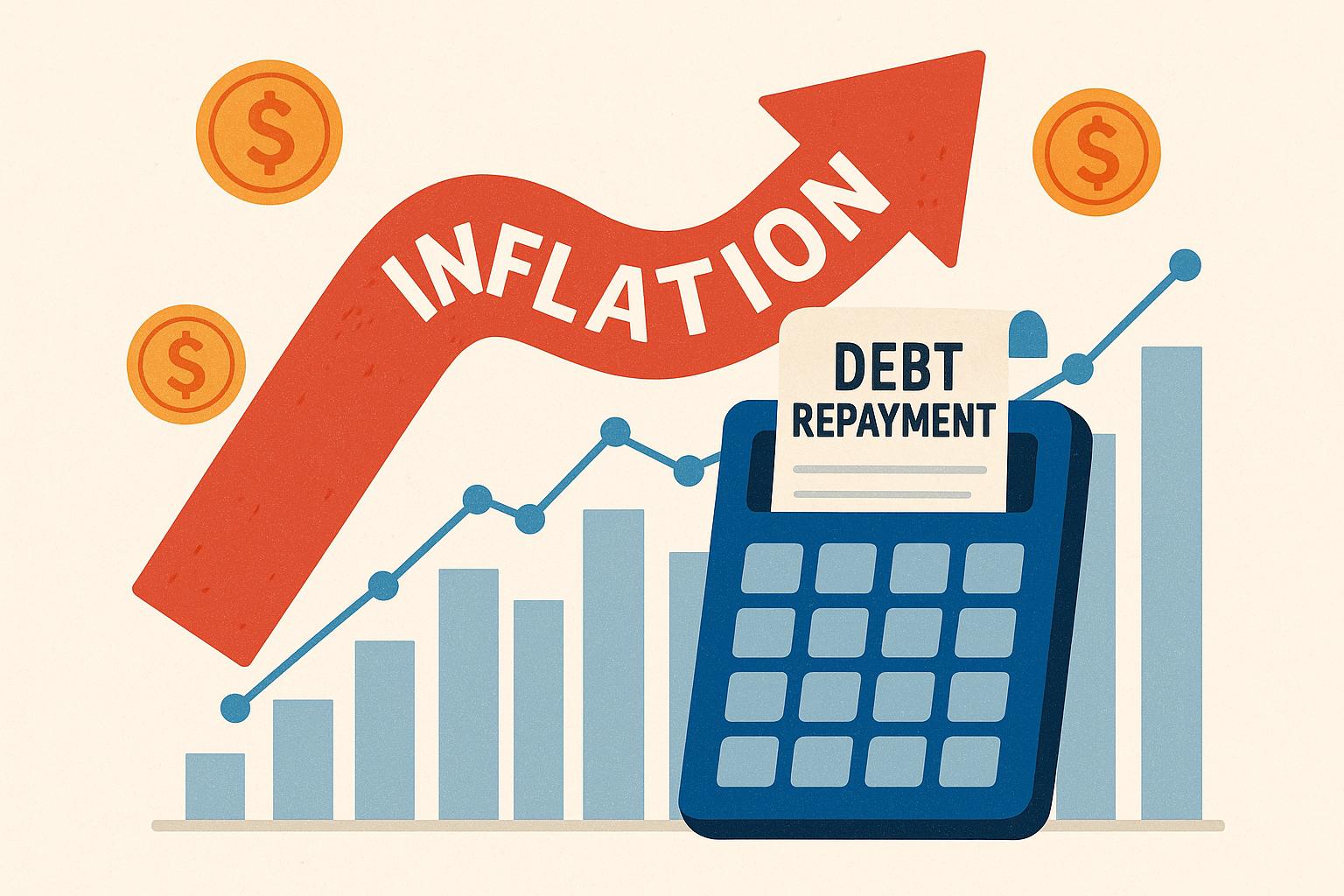
Inflation, defined as the rate at which the general level of prices for goods and services is rising, plays a crucial role in the economy by impacting various financial parameters, including personal and national debt. Understanding the relationship between inflation and debt repayments is pivotal for both individuals and policymakers in making informed financial decisions.
Understanding Inflation’s Effect on Debt
Inflation affects debt repayment significantly. The nominal value of debt remains the same over time; however, inflation decreases the real value of money. In essence, this means that as inflation rises, the real burden of debt decreases for borrowers. If you borrowed a certain amount, the value of that amount becomes effectively less in terms of what it can purchase, assuming your income increases to keep pace with inflation. Therefore, inflation can have varying effects depending on several factors, including the type of interest rate applied to the debt.
Fixed Vs. Variable Interest Rates
The type of interest rate on a loan—fixed or variable—determines how inflation impacts debt repayment:
Fixed-Rate Debt: For borrowers with fixed-rate loans, inflation can be beneficial. Since the debt payments remain the same while income potentially increases due to inflation, the relative financial burden of the debt decreases. This scenario allows borrowers to allocate funds that would have otherwise gone towards debt repayment to other financial goals, thereby enhancing their financial flexibility. In times of high inflation, such borrowers could potentially pay off their loans quicker as income increases relative to the static loan repayments.
Variable-Rate Debt: Conversely, for variable-rate loans, rising inflation can lead to higher interest rates, increasing the cost of borrowing and the burden on repayments. As inflation expectations rise, lenders may adjust interest rates upwards to maintain their returns. This adjustment can significantly impact borrowers with variable-rate debt, as their repayments can increase in tandem with rising inflation rates. Therefore, understanding the nature of one’s debt and the inflationary environment is crucial in managing financial obligations effectively.
Impact on Lenders
While inflation can ease the repayment burden for borrowers, it serves as a disadvantage for lenders. When inflation rises, lenders receive money that has less purchasing power than when it was lent out. This scenario is particularly pertinent in long-term loans with fixed interest rates. Consequently, lenders might raise interest rates for new loans or adjust their lending criteria to mitigate the impact of inflation on their earnings.
Lenders often try to compensate for inflation risk by imposing higher interest rates. This adjustment aims to ensure that returns on loans meet their expected value in real terms despite inflationary pressures. As a result, the cost of borrowing can increase for individuals and businesses, leading to a slowdown in economic activities funded by credit.
Government Debt and Inflation
At the national level, inflation can also influence how governments handle debt. Governments may benefit from inflation in repaying public debt, especially if a significant portion is in fixed-rate instruments. Inflation effectively reduces the real value of outstanding debt, allowing governments to repay obligations with money that is worth less. This aspect can be advantageous for governments seeking to manage their debt levels and fiscal budgets.
However, sovereign debt holders might demand higher interest rates to compensate for inflation risk, potentially increasing the cost of future borrowing. Rising borrowing costs can impact fiscal policies, leading to adjustments in taxation, spending, and public investment strategies. Consequently, understanding and managing inflation expectations become critical components of national economic policy.
Managing Debt During Inflation
For individuals and businesses, inflationary periods necessitate strategic adjustments in financial planning. It is advisable to focus on several key areas to mitigate the impact of inflation on debt obligations:
Review Existing Debt Portfolios: Understanding exposure to variable rate increases is crucial. Evaluating the composition of debt and its associated interest rates can help borrowers anticipate changes in repayments due to inflation. Identifying opportunities to shift from variable to fixed-rate loans can provide predictability in repayments.
Consider Refinancing Options: If fixed interest rates are expected to rise, refinancing existing liabilities under current terms might offer long-term benefits. Exploring refinancing options when interest rates are still manageable allows borrowers to secure favorable loan terms that are insulated from future inflation pressures.
Monitor Inflation Trends and Fiscal Policies: Being informed about inflation trends and government fiscal strategies can provide early indicators of changes that might impact personal finances. Adjusting budgets and investment strategies in response to these indicators can enhance financial resilience during inflationary periods.
For further resources on managing debt amid changing inflation rates, financial advisory portals such as Investopedia offer comprehensive insights and practical approaches tailored to various financial scenarios.
Conclusion
Inflation’s impact on debt repayment highlights the complex interplay between economic factors. While it can reduce the real burden for borrowers, it poses challenges for lenders and necessitates careful financial planning. Understanding these dynamics is essential for managing personal and governmental debt effectively during inflationary periods. By considering factors such as interest rate types, utilizing strategic refinancing, and staying informed on economic trends, individuals, businesses, and policymakers can better navigate the challenges posed by inflation in the context of debt repayment. The intricate relationship between inflation and debt underscores the importance of strategic planning and economic foresight in managing financial obligations effectively.